Before we had kids, most of the board games in our house were really just for two players — my wife and me.
Like many couples, we enjoy games… but my wife don’t always enjoy losing. I swear I am totally cool about losing, I really am!
Being a coolly competitive one (and a lifelong gamer), I tended to win more often than not. And as everyone knows, when your wife loses too many games in a row… the evening may end earlier than expected.
The problem is, even when I know I shouldn’t, I still can’t resist playing that one card that seals the win.
That was when we discovered cooperative games like Hanabi. Instead of playing against each other, we were suddenly working together — trying to build the perfect fireworks show without seeing our own cards.
Strangely, it changed the mood completely.
Instead of competing, we were discussing moves, laughing at mistakes, and celebrating small victories together.
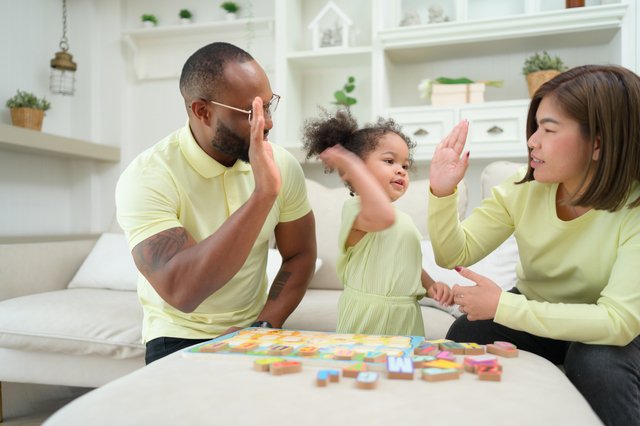
Later, when our kids started joining us around the table, cooperative games became even more valuable. Younger children often find losing frustrating, but when everyone is on the same team, the experience becomes about solving a challenge together.
Here are five cooperative board games that work beautifully with kids, starting from the simplest.
If you’re looking for more family-friendly games, you may also enjoy:
My First Castle Panic
Best for: Ages 4–6
Players: 1–4
Play time: ~15 minutes
Difficulty: 👣
Text-heavy: None
Why it works:
Monsters are marching towards the castle, and players must work together to stop them before they reach the walls.
Children play cards that match colours on the board to defeat the monsters. The rules are extremely simple, which makes it a great first cooperative game for younger children.
Every time a monster is defeated, the whole table cheers.
Outfoxed!
Best for: Ages 5–7
Players: 2–4
Play time: ~20 minutes
Difficulty: 👣👣
Text-heavy: Minimal
Why it works:
Someone stole Mrs Plumpert’s pie, and the players must work together to figure out which fox did it.
Players move around the board collecting clues and using a clever decoder to eliminate suspects one by one. Kids love the moment when the decoder reveals a clue and another fox is crossed off the list.
It feels like real detective work — but designed for younger players.
Zombie Kidz Evolution
Best for: Ages 6–10
Players: 2–4
Play time: ~15 minutes
Difficulty: 👣👣
Text-heavy: Minimal
Why it works:
Zombies are invading the school, and the players must work together to close the gates before too many get inside.
What makes the game special is that it slowly evolves over time. As you win games, you unlock envelopes that introduce new rules, characters, and surprises.
Kids love the sense that the game is gradually revealing new secrets.
Forbidden Island
Best for: Ages 8–12
Players: 2–4
Play time: ~30 minutes
Difficulty: 👣👣👣
Text-heavy: Some
Why it works:
Players are explorers trying to recover ancient treasures before the island sinks beneath the sea.
Each turn the island floods, forcing the team to decide carefully where to move and which locations to save.
It’s one of the best games for teaching planning and teamwork.
At our house, it even inspired a living-room version of the game — chairs became tunnels, benches became balance stations, and pickleball bats turned into jumping islands.
Magic Maze Kids
Best for: Ages 5–8
Players: 2–4
Play time: ~15 minutes
Difficulty: 👣👣
Text-heavy: None
Why it works:
Each player controls different actions — one may move characters north, another east, another flips tiles.
Everyone must work together in real time to guide the heroes through the maze.
It quickly turns into a joyful mix of pointing, laughing, and excited shouting as players try to coordinate their moves.
Final Thoughts
Cooperative games create a very different atmosphere around the table.
Instead of worrying about who wins, children focus on solving the problem together. Victories are shared. Mistakes become funny stories.
And sometimes the teamwork continues even after the game ends. All my kids will definitely help pack the game away — something that almost never happens when someone loses.
Sometimes it turns into building obstacle courses in the living room, inventing new challenges, and turning ordinary furniture into castles, islands, and adventures.
All screen-free.