Not every parent is looking for a grand activity with kids.
Sometimes, it’s just a simple day like today, Good Friday.
Wishing you and your family a calm and meaningful day.
For the Chinese here, we celebrate our Qingming Festival. After a hot and eventful morning – memorial services, paying respects to our ancestors, we just want a quieter afternoon.
Slower, calmer, albeit a little boring but a more peaceful one. Certainly less likely to trigger those traumatic morning outbursts from cranky kids who were hot and hungry.
And honestly, on days like this, 20 minutes of peace – that would be just what the doctor ordered.
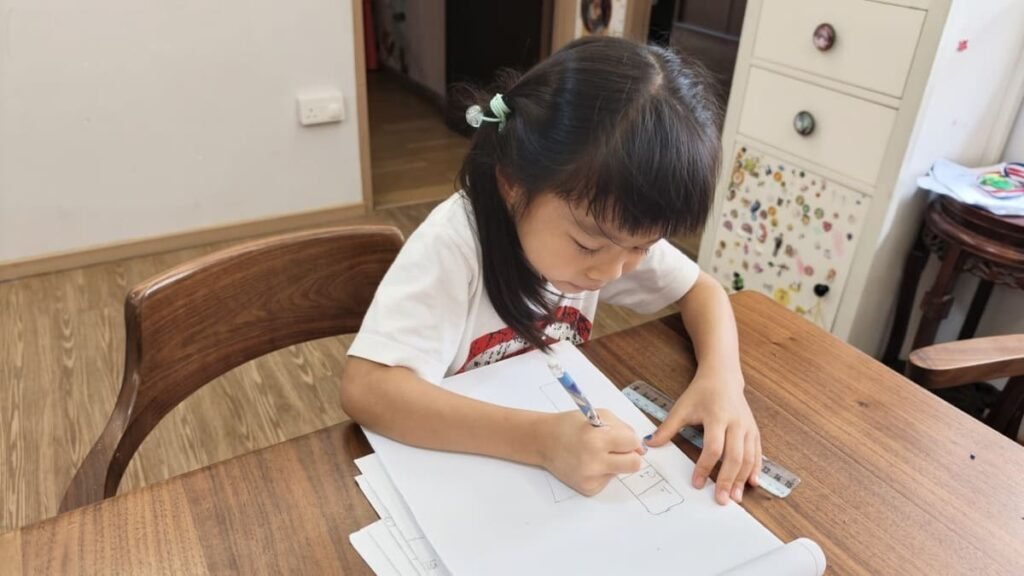
To reply messages. To finish a task. To write something like this — while your child sits beside you, happily doing their own thing. (As I’m writing this, my child is right next to me, completely absorbed in drawing straight lines on scrap paper with a ruler, and learning how to spell her friends’ names. That’s it. And it’s working.)
So you can see, it doesn’t take much to get there.
Just something fast. Low-mess. Easy to start.
Because the best screen-free activities don’t start big — they start small.
A simple invitation.
A tiny challenge.
A clear starting point.
That’s often enough to get a child over the hardest part: getting started.
And once they begin, something interesting happens — they keep going.
Five minutes of setup can turn into 15 to 20 minutes of independent play.
Here are a few that work especially well at home.
1. The “Build One Thing” Challenge
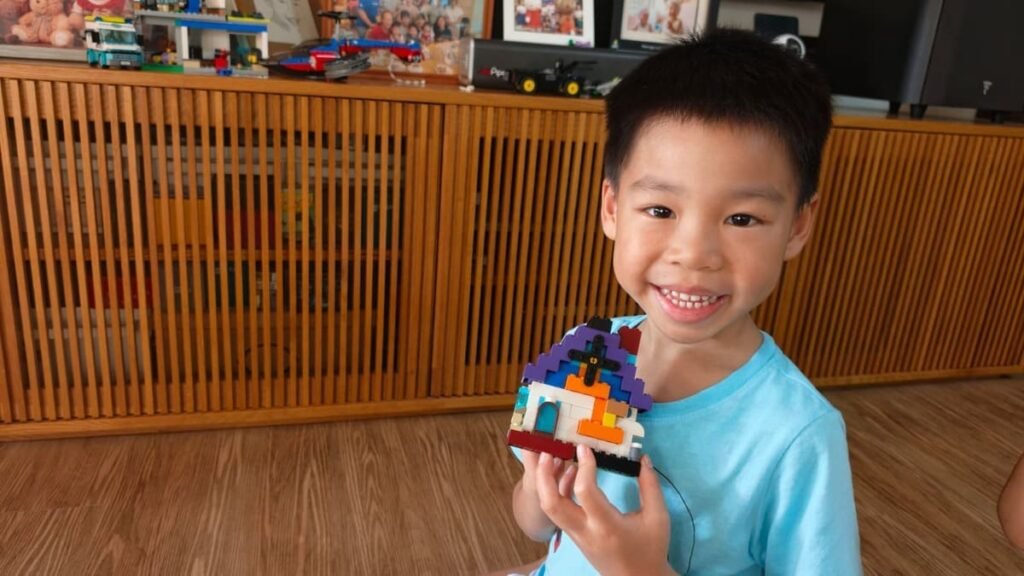
This works well with LEGO, magnetic tiles, blocks, cardboard, paper cups, or anything stackable.
Do not say, “Go and play.”
Give one small mission instead:
- Build the tallest tower you can
- Make a house for a toy
- Build a bridge
- Create an animal
- Make something that can hold one coin
The trick is giving a clear starting point. Open-ended play is great, but some children freeze when there are too many choices. One simple prompt removes that friction.
Once they start building, they usually begin adding their own rules, stories, and extra goals.
2. Tape Road on the Floor
Masking tape is magic.
In less than five minutes, you can create a road, racetrack, parking lot, hop path, or mini maze on the floor. Then leave out a few toy cars, animal figures, or small people.
That is enough.
Children often take over from there. The road becomes a city. The city becomes a rescue mission. The rescue mission somehow becomes a traffic jam involving dinosaurs.
It is low effort, cheap, and surprisingly reusable.
3. Mystery Bag Challenge
Put 5 to 8 random household items into a bag or basket.
For example:
- spoon
- sock
- toy car
- paper clip
- block
- ribbon
- cup
Then say:
“Can you make something with these?”
or
“Can you make up a story using all of them?”
This works because children are naturally curious when things are grouped in unusual ways. Random objects feel more interesting when presented as a challenge.
It also works across ages. Younger kids might sort or pretend. Older ones may invent, build, or create storylines.
4. Drawing Prompt Card
Plain drawing sometimes gets ignored. A drawing challenge works better.
Write a few quick prompts on slips of paper:
- Draw the funniest monster
- Draw your dream treehouse
- Draw a shop that sells only snacks
- Draw an island with a secret cave
- Draw a pet that does not exist
Let them pick one.
You only need paper and something to draw with. That is what makes this a strong backup activity for hot afternoons, busy days, or that awkward time before dinner.
You can also keep a small jar of prompts ready so you do not have to think on the spot every time.
5. Card Game Setup
Some of the best “peace-buying” activities are games children already know.
If your child can play a simple card game, all you need to do is set it out and start the first minute with them. That little bit of momentum often carries the rest.
Good options include:
- Snap
- Memory
- Go Fish
- Old Maid
- Uno
- simple matching games
Once the game begins, siblings often continue without much help.
If your kids are still learning, keep it very simple. The goal is not mastery. The goal is easy engagement.
You can also read 5 Simple Card Games Young Kids Can Learn in 10 Minutes for more easy options.
Why These Work Better Than Big Activities
Big activities sound nice, but they often fail in real life.
They need too much setup.
Too much energy.
Too much parent involvement.
These quick activities work because they do three things well:
1. They reduce choice overload
A small prompt is easier to begin than a whole shelf of toys.
2. They create momentum
Once children start, they often extend the activity on their own.
3. They feel manageable for parents
You are far more likely to use a 5-minute idea than a 45-minute craft.
That matters. The best activity is the one you will actually do.
A Good Rule of Thumb
When your child says, “I’m bored,” do not rush to entertain.
Just start one thing.
Not ten options.
Not a Pinterest plan.
Just one simple invitation.
That is usually enough to shift the mood.
And on some days, five minutes of setup really can buy you twenty minutes of peace.
Pingback: The 30-Minute No-Screen Routine That Actually Works – Screen Free Playtime
Pingback: The 30-Minute No-Screen Routine That Actually Works - Screen Free Playtime