Ariel, my six-year-old, is not a numbers kid. Ask her what seven plus five is and you’ll get a long pause and a hopeful guess. But put a jigsaw in front of her and she’s a different child — she’ll work a hundred-piece puzzle in near silence, long after her brothers have wandered off, and her teachers say the same, that she locks in the moment there are shapes to fit together. That knack has a name, spatial reasoning, and some kids are quietly, wonderfully good at it, even when numbers leave them cold.
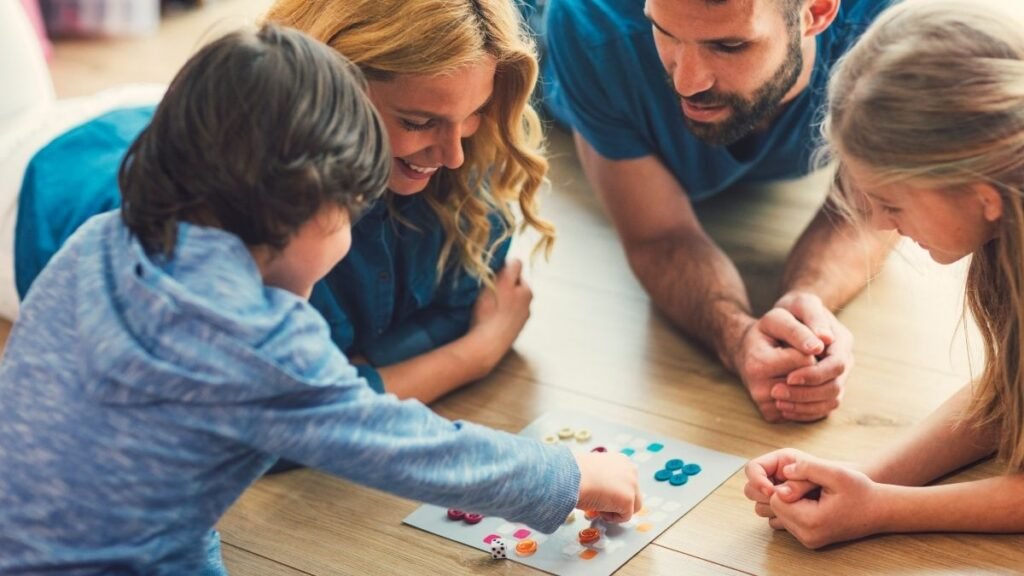
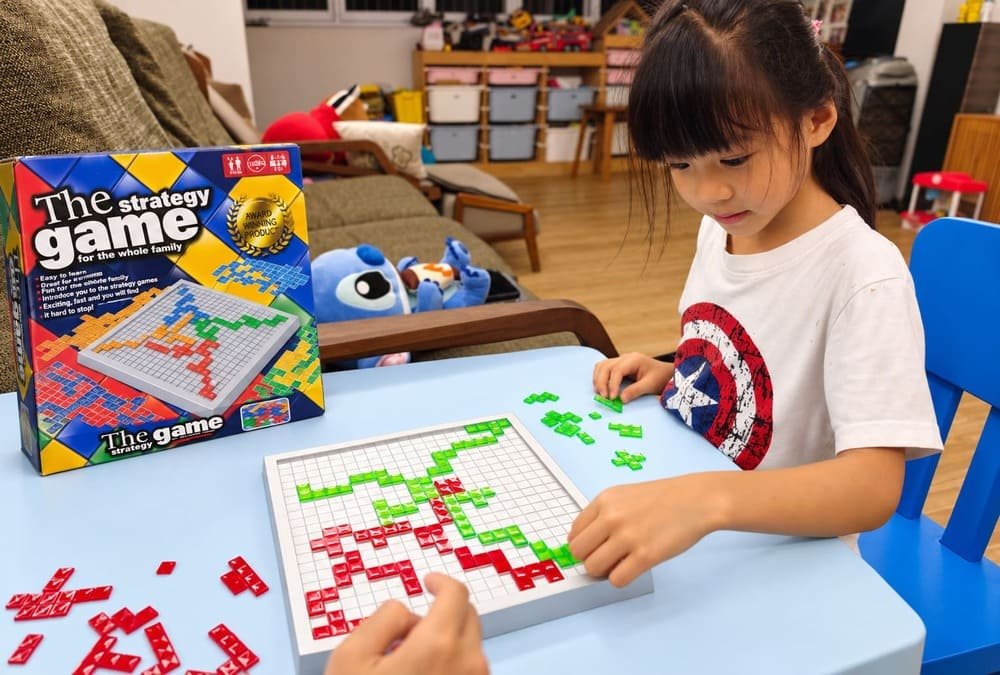
I wasn’t even there for the moment it became obvious. I was at work; Miley was playing Blokus with the three of them, and she told me afterwards, half-laughing, that Ariel had calmly beaten the lot — seeing, better than her older brothers, exactly where each odd little shape wanted to go. I’ve watched it since, and she’s merciless: give her shapes to fit and she just sees it — the way through, while the rest of us are still turning pieces over.
It’s easy to assume the “clever” kid is the one who’s quick with sums. But spatial reasoning — thinking in shapes, rotating and fitting and picturing how things slot together, is its own distinct intelligence, separate from the number-and-word smarts school tends to measure. And the lovely thing is you can feed it directly, with a box of shapes and no screen in sight.
As a PE teacher I see this constantly, the kid who’s middling in the classroom but reads space and movement better than anyone in the room. Games are one of the few places that kind of thinking gets to be the winning move rather than the overlooked one.
So here are the games for the shape-thinker in your house. Some are a loud race around the table; a couple are for a quiet kid and a tricky puzzle on a rainy afternoon. All deliver the good kind of “I’ve got it!” , the click of a shape finally sliding home.
What makes a game a spatial reasoning game (and two that just miss)
A quick honest word before the list, because it’s the whole point. A true spatial reasoning game is one you win by picturing — rotating a shape in your head, seeing how pieces fit, holding a structure in your mind’s eye. That’s a different muscle from pattern-spotting or step-by-step logic, and it’s exactly the one a shape-thinker like Ariel has in spades.
It’s also why two obvious “puzzle board games for kids” aren’t on this list. Qwirkle is wonderful — but it’s really pattern-matching with a dash of arithmetic, closer to maths than shapes. Rush Hour is a brilliant solo brain-bender, but it’s sequential logic, working backwards from a goal, not spatial picturing. Both are superb; they just train a different brain. (If pure logic is your kid’s thing, Rush Hour is the one to buy — it’s just a different post.) Everything below is spatial thinking, more or less undiluted.
The anchor — the game that started this whole train of thought. You each get a set of Tetris-ish pieces in your colour and lay them on a shared board, but every new piece can only touch your own colour corner-to-corner, never edge-to-edge. So it’s a quiet, ruthless battle for space: blocking everyone else while squeezing your own awkward shapes into shrinking gaps. No reading, no sums, no luck — just the knack of looking at a jumble of shapes and seeing where they fit. Which is exactly the thing my Ariel does better than the rest of us.
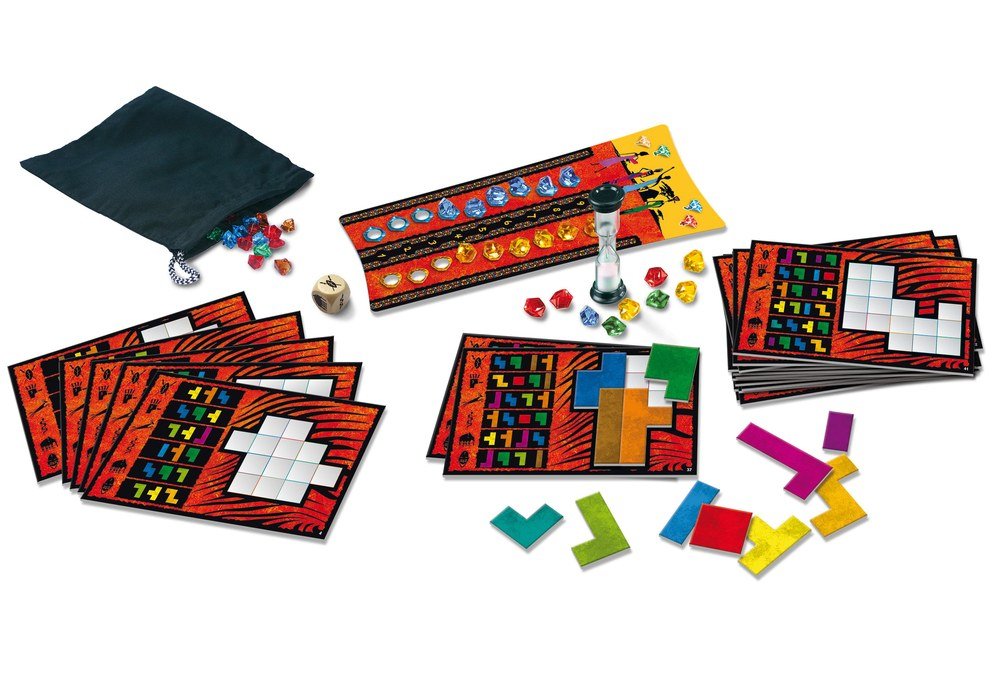
Pure, frantic joy. Everyone gets the same puzzle — a shape to fill — and a handful of polyomino tiles, and you all race at the same time to cram your tiles into the outline and yell “Ubongo!” first. There’s no waiting for turns, and the speed is what makes it sing: a kid who spots the solution fast genuinely beats the adult still turning a piece over. It’s Swahili for “brain,” and it earns the name.
A gorgeous, almost zen little game: on your turn you lay a path tile in front of your own dragon, and it travels wherever that path now leads. The catch is the board fills up, paths tangle, and someone else’s tile can suddenly send your dragon careering off the edge and out of the game. Staying alive means picturing, several moves ahead, how all these winding paths will connect and collide. It’s spatial reasoning dressed up as a beautiful, slightly cutthroat race — and it plays up to eight, so it’s your pick for a full table.
Part puzzle, part race. You roll seven dice, drop a blocker into each square they point to, then everyone races to fill every remaining space on their grid with wooden shapes. The clever bit: every possible roll has a solution — always — so nobody’s ever handed an impossible board; it’s purely about who finds the fit fastest. Play it head-to-head as a race, or give one grid to a single kid as a quiet solo puzzle. And because the dice build a new puzzle every time, it basically never runs out.
A beautiful wooden box of pentominoes — those five-square shapes — with a sliding divider that sets the size of the space you have to fill. Start small and easy, slide the divider along, and the puzzles grow to over five hundred combinations. It’s spatial thinking distilled to its essence: rotate, flip, fit, repeat, until the shapes lock the space shut with none left over. Lovely to handle, quietly addictive, and it grows with a child for years.
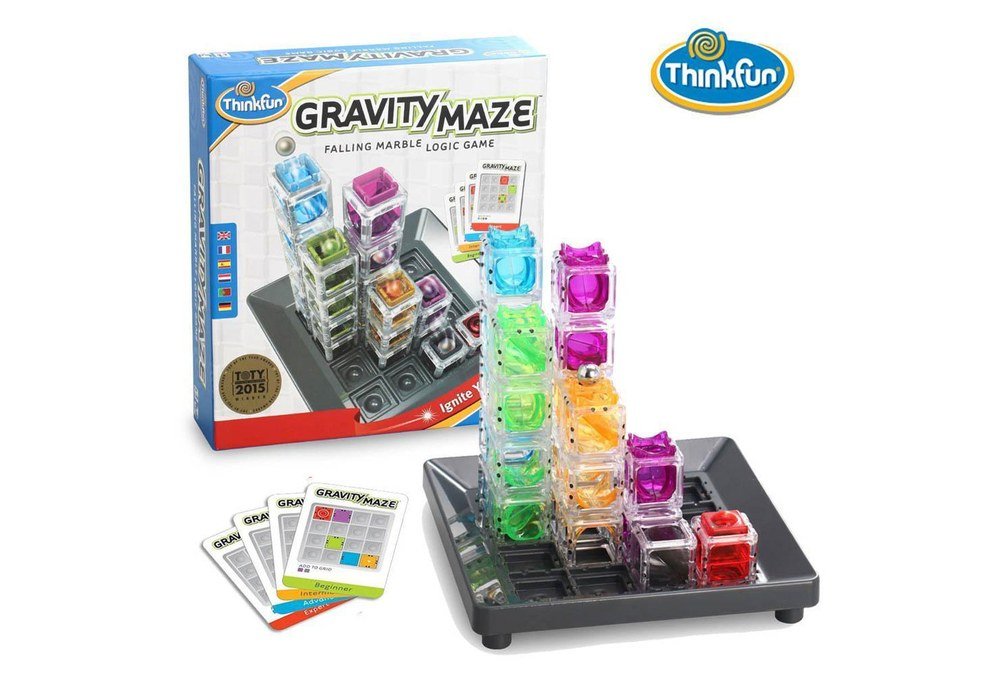
The most physical kind of spatial thinking here. You’re given a target and a set of clear towers, and you build a path through them so that a marble dropped in the top tumbles and falls its way to the goal. That means holding a 3D structure in your head — picturing how the marble will fall before you’ve placed a single tower. Sixty challenges climb from gentle to genuinely brain-twisting, and it won Toy of the Year. It’s the game for the kid who builds, who thinks in three dimensions, not just flat shapes.
Closing
None of these will make a reluctant kid love maths and that’s not the point. The point is that the child who thinks in shapes gets to be the clever one for an afternoon, gets to beat their big brother fair and square, and gets that particular glow of a hard puzzle cracked.
That confidence doesn’t stay at the table. It’s the same thinking that, years later, reads a map without turning it upside down, packs a boot that shouldn’t fit, or sketches something that actually works. Feed it now, while it’s still this much fun.
More quiet-clever play
- 10 Best Solo Board Games for Kids — more for the quiet, independent player.
- Best Board Games for Family Game Night — for the ones that fill a whole table.
- Where to Buy Board Games in Singapore — for the trickier-to-find puzzle titles.