I want to be upfront about something.
I’m a nurse. I work long shifts. I have three kids — Elliot, Julian, and Ariel — and by the time I get home most evenings, I am, frankly, running on the last 4% of my battery.
So when people talk about screen-free play and child development, my first instinct isn’t oh how wonderful.
It’s more like:
easy for you to say.
But here’s what I’ve actually noticed — not from research first, but from my own living room.
When the screens go off and the initial protest dies down (and it does die down, eventually), something shifts.
Elliot stops asking what’s next.
Julian and Ariel stop bickering over whose turn it is on the tablet.
And after about ten minutes of
“I’m bored”
“there’s nothing to do”
One of them picks something up — a deck of cards, a board game, a random cardboard box — and they just… start.
That’s when I started paying attention.
If your evenings feel like this, you’re not alone — here’s what to do when kids say “I’m bored”
🧠 What Screen-Free Play Actually Builds
I went back to the research after observing my own three.
Turns out what I was seeing at home has a name.
Research from the American Academy of Pediatrics highlights that unstructured, screen-free play supports healthy brain development, emotional regulation, and social skills in children.
1. Focus — the kind that actually lasts
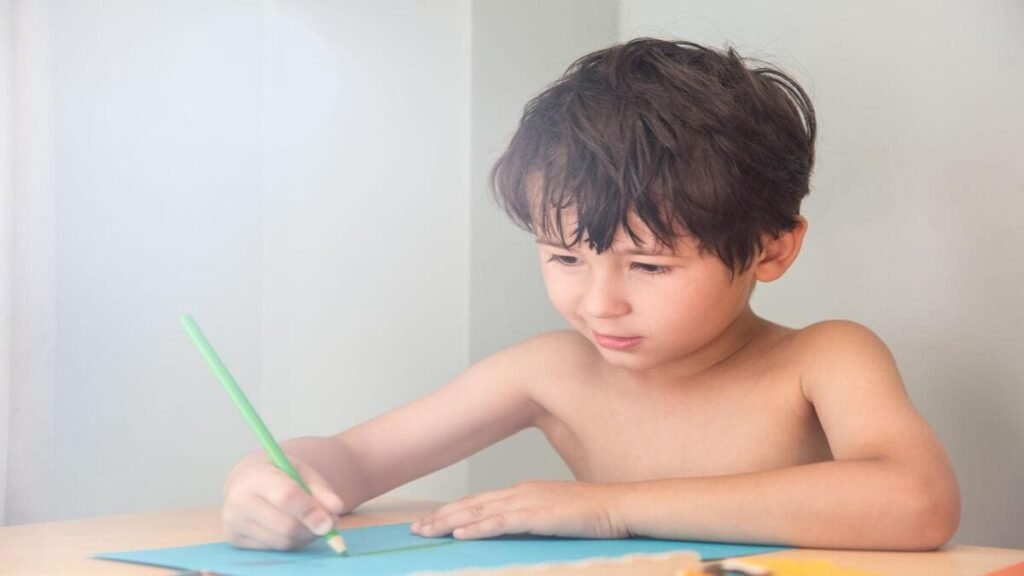
Screens move fast. That’s the whole point.
Every few seconds, something new.
Kids’ brains adapt to that pace — which means when things slow down, it feels unbearable at first.
But push past that first ten minutes of
“I’m bored”…
Something interesting happens.
They settle.
They stay with one thing.
They stop needing constant stimulation.
I call it watching Elliot spend 40 minutes building a Lego structure he then immediately knocked over — and being completely fine about it.
👉 That’s real attention.
Not the borrowed kind from a screen.
2. Creativity — not colouring-in creativity, actual thinking
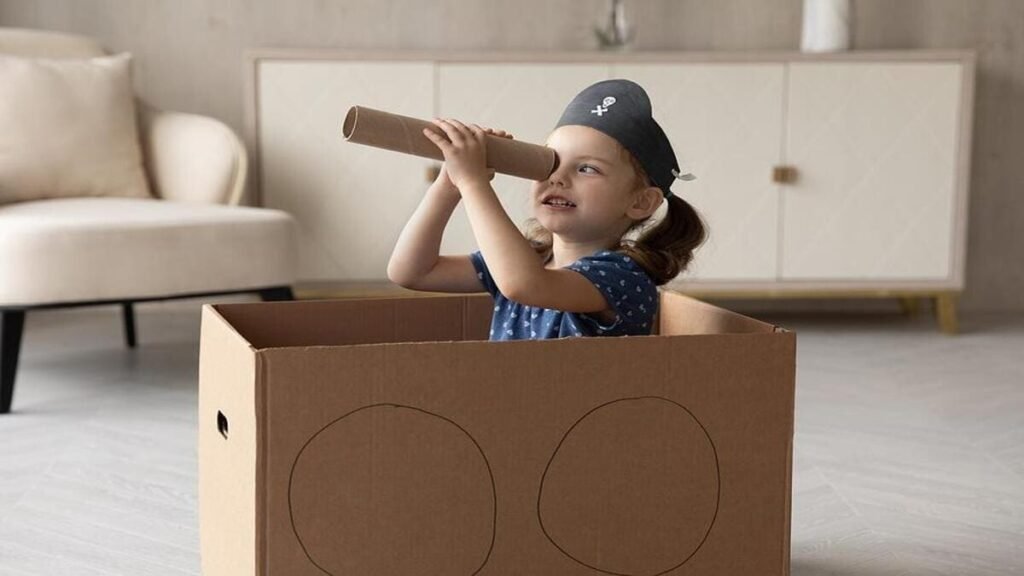
No instructions.
No levels.
No correct answer.
And three kids who’ve decided the living room is now a pirate ship — and I am, apparently, the sea monster.
The Harvard Center on the Developing Child calls this open-ended play a builder of executive function — the ability to plan, focus, and adapt.
My kids call it Tuesday night.
3. Emotional regulation — this one took me a while
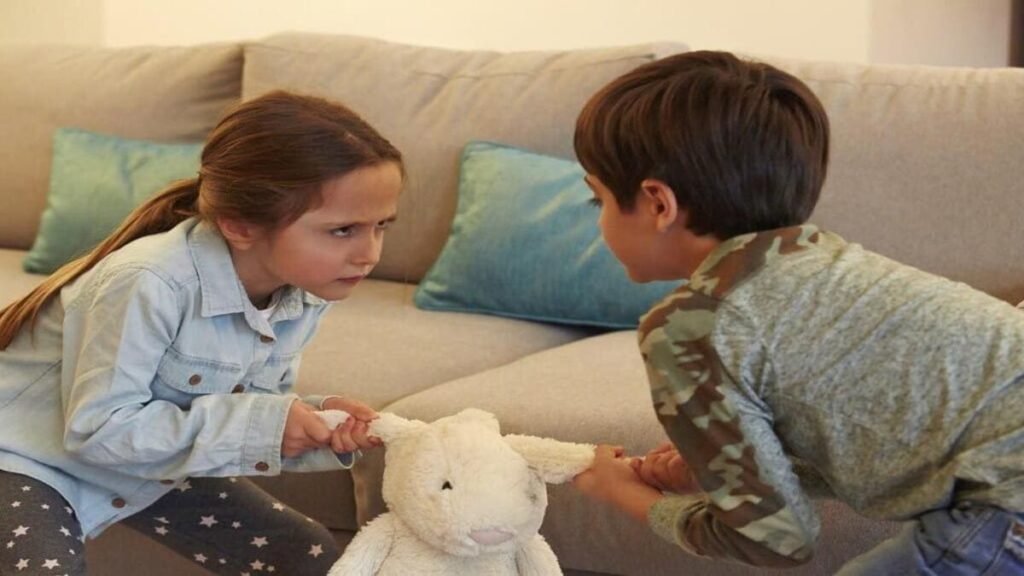
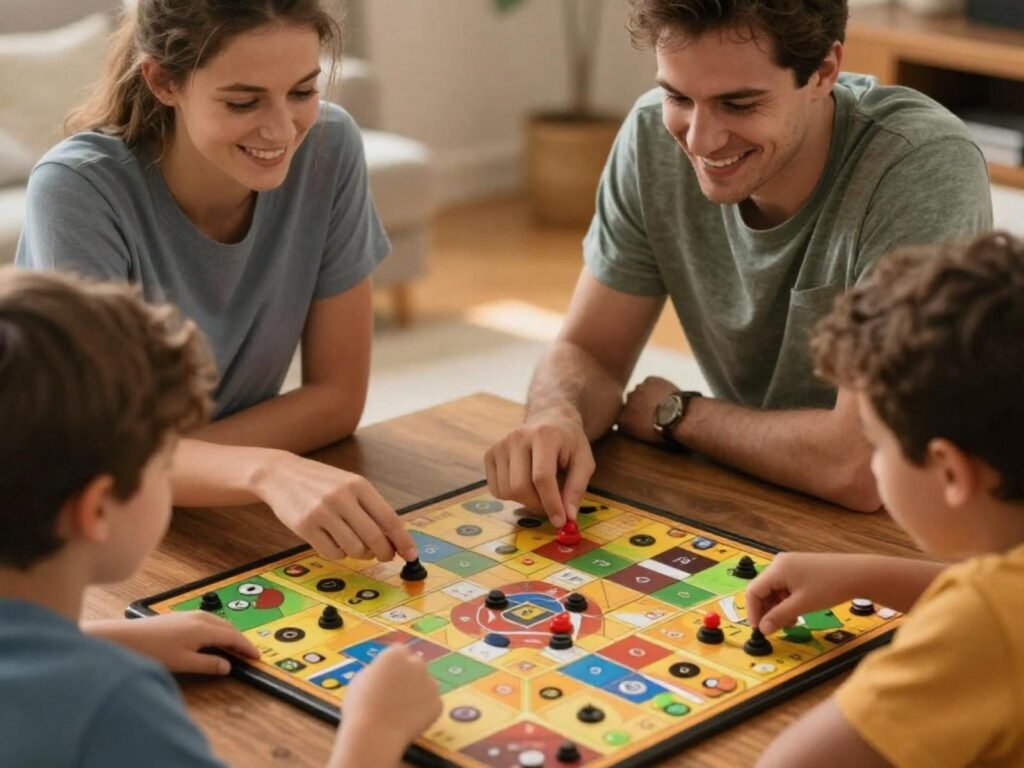
Here’s the thing about board games that I didn’t notice at first.
They’re emotionally hard.
You lose.
You argue.
You get a bad hand and have to sit with it.
Ariel once flipped the entire Uno deck off the table because Julian played a Draw Four on her
We didn’t stop playing.
We talked about it, reset the cards, and carried on.
That moment — small, ordinary —
is where resilience gets built.
4. Social skills — the messy, real kind
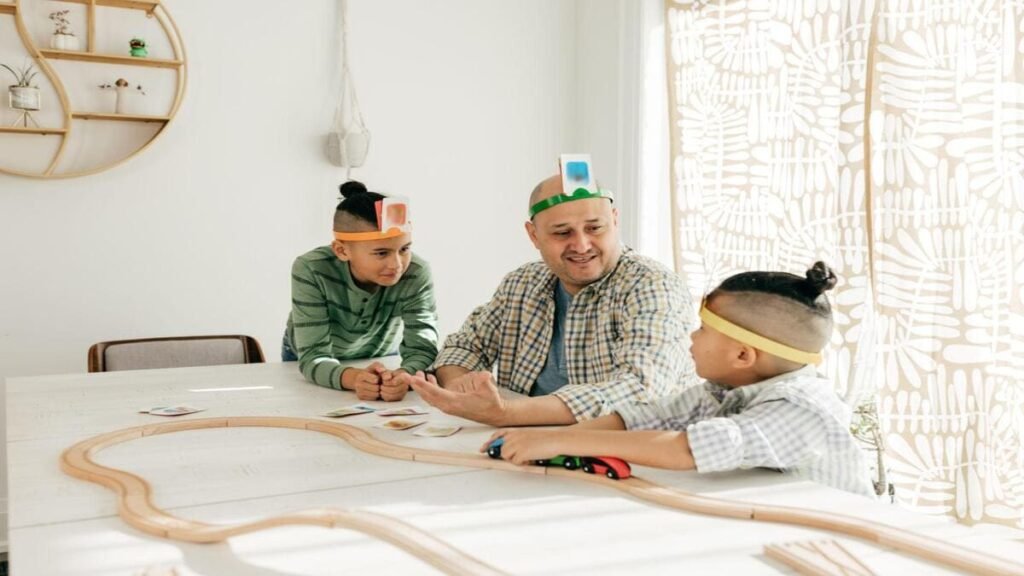
Screens are quiet. Even when they look social.
Board games aren’t.
You have to:
- read the room
- wait your turn
- negotiate rules
Elliot has learned more about reading people from playing Guess Who? and Outfoxed! than from anything I’ve tried to teach.
If you’re looking for simple starting points:
👉 Best Card Games for Kids
👉 Best Board Games for Family Game Night
5. Physical development — even the subtle kind
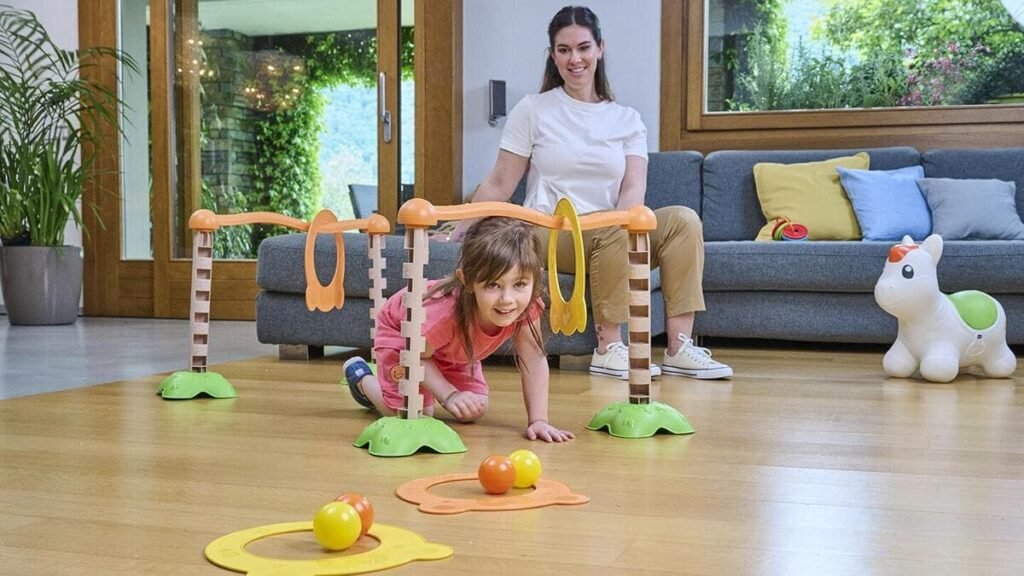
Even indoors, kids move.
They:
- reach
- shift
- fidget
- jump up when they win
It’s not PE. But it’s not nothing.
The World Health Organization is clear — daily movement and active play aren’t optional for growing kids.
They’re the baseline.
🎯 The benefit most parents don’t expect
Screen-free play doesn’t just help the kids.
It changes the energy in the house.
Even locally, guidance from the Health Promotion Board encourages balancing screen use with active play and family interaction — something many of us are still figuring out day by day.
Less whining.
Less “what next?”
Less low-grade restlessness.
And I’ll be honest —
There’s something about watching your kids genuinely absorbed in something that doesn’t need charging or WiFi…
that quietly fills you back up too.
💡 What this actually looks like
Not a perfect routine.
Just small prompts that work in our house:
- “Go build something.”
- “Pick a game — I’ll join you in ten minutes.”
- “One round before bath.”
If they resist, start smaller.
Even a 30-minute screen-free reset routine can shift the whole evening.
🧠 One last thing
I’m not here to tell you screens are the enemy.
I’m a tired nurse with three kids.
Screens have their place.
But when you reduce them — even slightly, even imperfectly — you’ll notice something:
👉 Kids don’t need as much entertainment
when they learn how to make their own.
It took me a while to believe that.
Now I’ve seen it enough times that I do.
This article draws on current child development research and guidelines from organisations including the American Academy of Pediatrics, Harvard Center on the Developing Child, World Health Organization, and locally, Health Promotion Board.

Pingback: What to Do When Kids Say "I'm Bored" (Without Using Screens) - Screen Free Playtime
Pingback: The Complete Guide to Screen Time Limits for Kids by Age (Below 10 years old) - Screen Free Playtime