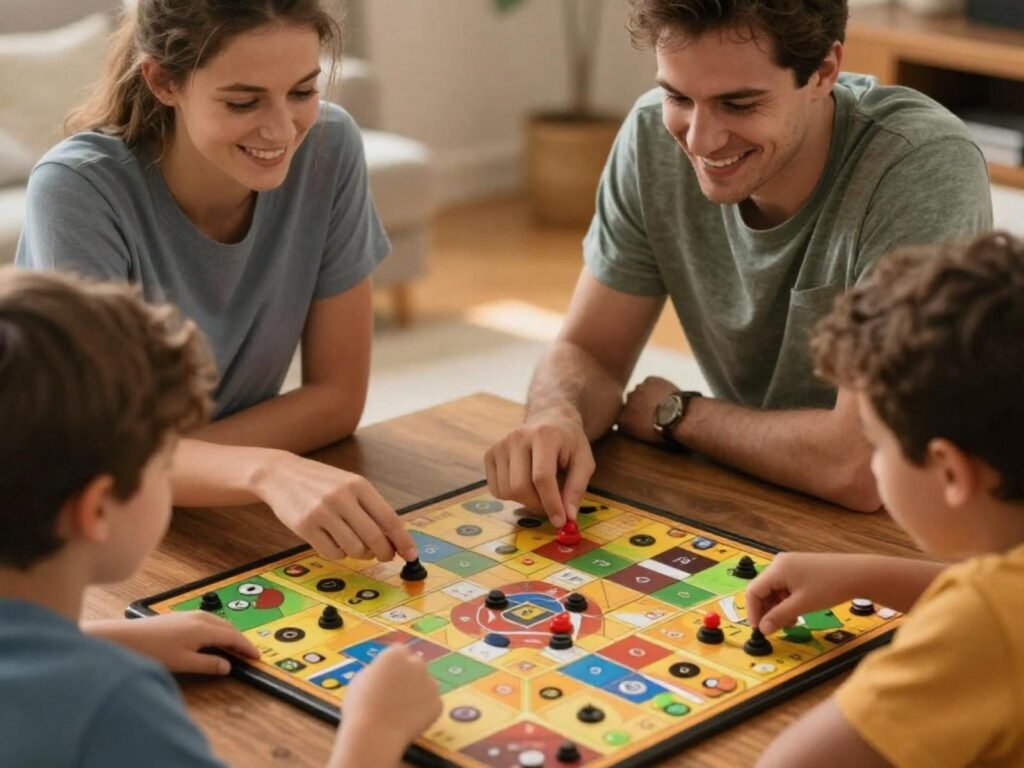
Let me start with a confession.
Last Thursday, Elliot had already been on the tablet for half an hour. I knew it. He knew it. And when I walked past the living room and saw Julian sneaking onto the other device, I just… didn’t say anything.
I went on to do other things instead.
No judgement from me if you’ve done the same. We’re all just trying to get through the evening.
The thing is, I’m not trying to be the screen police in my own home. I gave that up a while ago. What I am trying to do — badly, inconsistently, sometimes losing my temper about it — is find something that actually works on a normal weeknight. Just something that doesn’t end with someone crying.
So here’s what the research says, and here’s what’s actually held up in real life.
📊 Recommended Screen Time by Age (What Experts Say)
The World Health Organization and the American Academy of Pediatrics have guidelines.
They’re worth knowing — not as a measuring stick to feel bad about,
but as a rough anchor.
Ages 0–2

Avoid screens where possible
- Video calls are the exception
This stage is about:
- faces
- voices
- touch
- presence
Screens can’t replicate that — no matter how good the app claims to be.
Ages 2–5
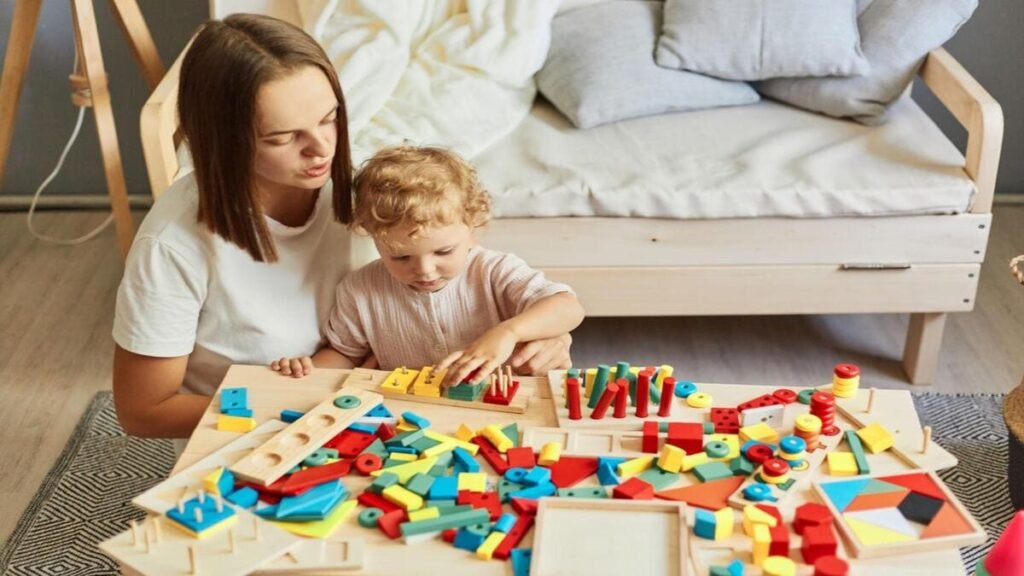
- Around 1 hour per day
- Ideally co-viewing (when possible)
I’ll be honest — “watch together” is not always realistic at 6.30pm.
But the one-hour anchor helps.
It gives you something to point to that isn’t just:
👉 “because I said so”
Ages 6–10
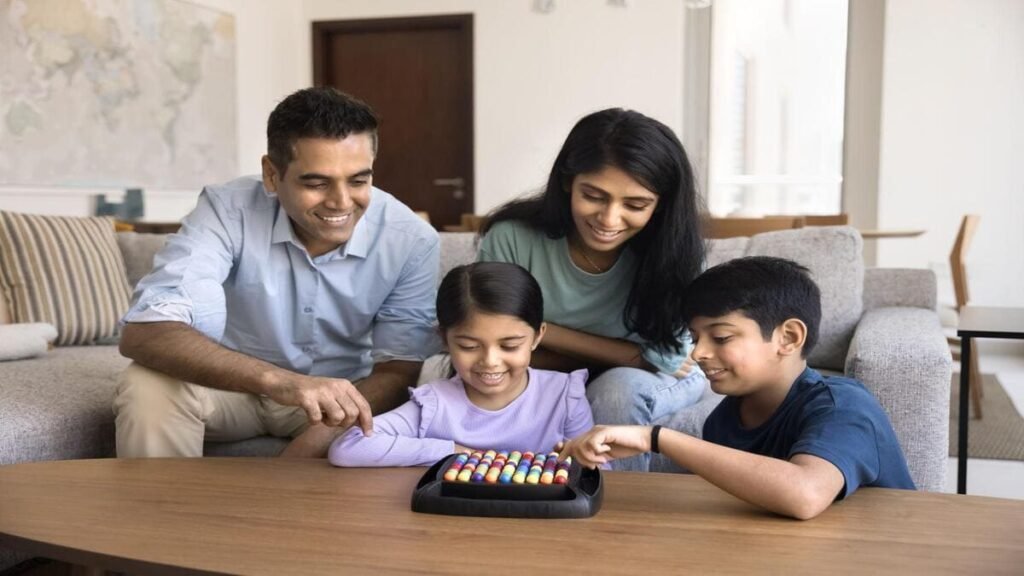
- About 1–2 hours per day (max)
- Consistency matters more than precision
At this age, kids negotiate.
Hard.
To be honest, we’ve been quite lucky on this front. We don’t really use screens to replace quality time, so it hasn’t become a daily expectation.
In our house, weekdays are mostly screen-free — Mondays especially are a strict no-screens day. Weekends are a bit more relaxed.
Recently, the kids have been into Tom and Jerry — the old classics — and we watch together. Mostly for the laughter, which honestly makes it worth it.
Once we set the rule and stuck to it, it actually became easier over time.
🧠 What Matters More Than the Number
This took me an embarrassingly long time to figure out.
It’s not just how long.
It’s:
👉 when
👉 what it replaces
Screens right before:
- bedtime
- school
- dinner
hit differently — even if total screen time is “within limits.”
Content matters too.
But honestly?
Less than we think.
Educational shows are better than random scrolling, sure.
But even “good” content becomes a problem when it turns into
👉 a 3-hour babysitter
(I know because I’ve done it, max 2 hours in my case, but I still feel terribly guilty)
The real question I ask myself now:
👉 What is this replacing?
- Sleep?
- Movement?
- Play?
- Conversation?
That’s where things start to tip.
What Has Actually Worked in Our House
Not strict rules.
Just one default that stuck:
👉 Screen after play
- move first
- be bored first
- do something first
Then screens.
This works because of the
👉 benefits of screen-free play
Kids learn to manage boredom instead of escaping it. Screens are served as a reward for doing homework too.
(If you want the deeper breakdown, read this:
👉 benefits of screen-free play for child development)
💡 What helps (when kids push back)
Because they will.
Every single time.
What has worked for us:
- no screens before school
- no screens during meals
- fixed “off” time at night (No Screens Monday)
And yes, sometimes, — they still argue like it’s new information.
The biggest thing:
👉 having something ready
Not elaborate.
Just:
- a board game
- a deck of cards
- something to build
The transition is easier when there’s something to go towards,
not just something being taken away.
If you need ideas:
👉 screen-free activities for kids
👉 best board games for family game night
(On rough days, even a simple
👉 20-minute screen-free reset helps
A local note
Even locally, the Health Promotion Board echoes the same message:
Balance screen use with:
- active play
- real interaction
Sounds reasonable at 10am.
Feels like a different universe at 8pm.
🧠 One last thing
I snapped at Elliot last week over his “Snake Game” on the PC.
Ranted at him to stop in a tone sharper than it needed to be.
And I stood there feeling terrible about it for the next twenty minutes.
We’re not raising robots.
We’re raising kids in a world full of screens —
trying to teach balance that most adults haven’t figured out themselves.
The goal isn’t zero screens.
It’s kids who:
- can put them down
- can sit with boredom
- can find something to do
Because that’s where:
👉 creativity actually begins
Some days we get closer.
Some days we don’t.
But we keep trying.
That’s the whole thing, really.
This article draws on current guidelines from the World Health Organization, American Academy of Pediatrics, and Health Promotion Board.