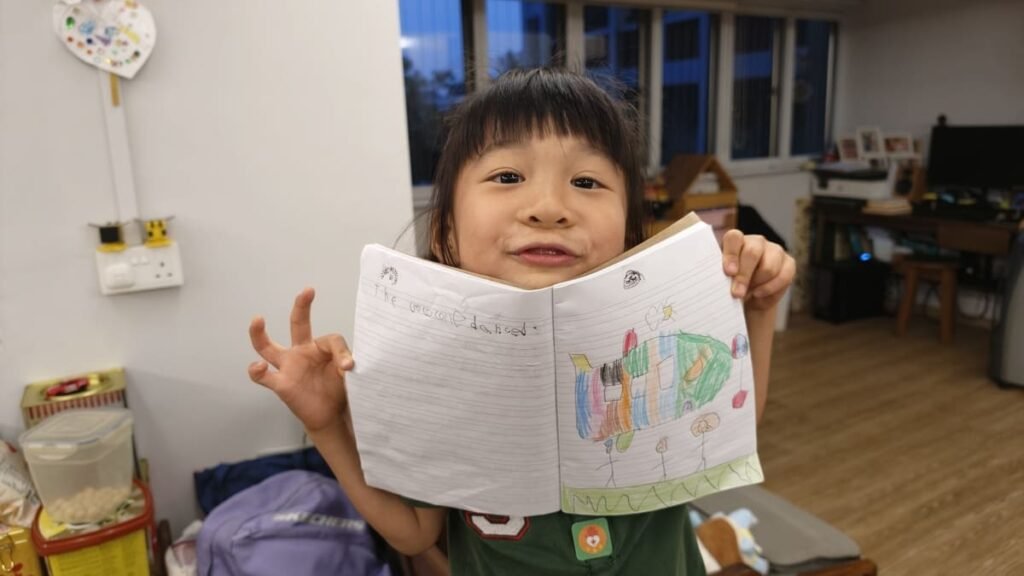
Some games need literally nothing.
And I mean that in the most specific way — not “oh just grab some stuff from around the house” nothing, but actual nothing. Paper. Pencils. Done. I didn’t even have to find the pencils because Ariel had been drawing all afternoon and they were already on the dining table — and even on the nights they’re not, our “black sausage-like” zipper pencil box is always somewhere on that table anyway. It basically lives there. I have always tried to return it to its original nesting place, but at some point, I gave up. It always come back.
That’s my kind of game night.
I’m a PE teacher. I spend my days planning, setting up equipment, explaining rules to kids who are only half listening, packing everything back into the bag, and doing it all again tomorrow. By the time I get home the last thing I want to do is read an instruction booklet.
Some of my board games are genuinely cursed in this way. I pick them up, read the first paragraph of the rules, and quietly put them back on the shelf. We own at a dozen games I have never successfully taught anyone because I lost patience before I finished explaining them. Miley thinks I bought them for decoration.
I’d rather just get into it. Skip the preamble, skip the “okay so the way this works is—”, just start playing and figure out the rest as we go. Drawing games are perfect for this because there is almost nothing to explain. You draw. Someone guesses. Things go wrong. Everyone laughs. That’s the whole game.
Drawing games have no instruction booklet. They barely have rules. And somehow — this is the part that still surprises me — they work better than half the games sitting in our cupboard.
3 drawing games that actually work
1. Eat Poop You Cat
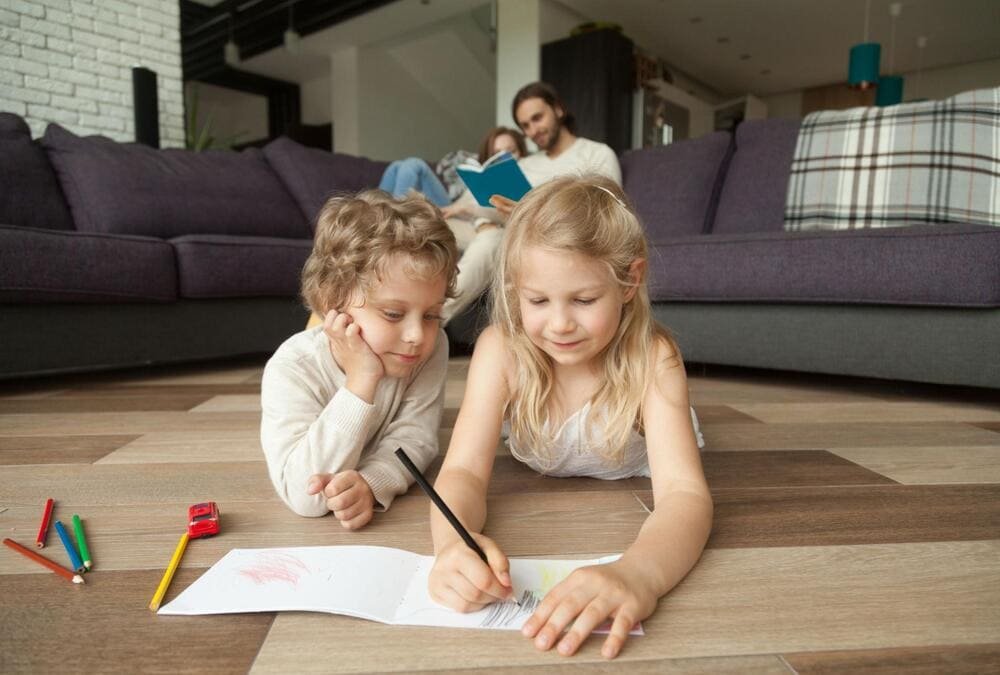
Yes, that’s the real name. No, I did not make it up. Yes, the kids find the name alone hilarious before we’ve even started — which honestly does half the work of getting everyone to the table.
We don’t actually call it by the original name at home. Somewhere along the way it became Poo Poo Mei Mei and Pee Pee Di Di — Poo Poo Little Sister and Pee Pee Little Brother in Chinese — which tells you everything you need to know about the maturity level at our dining table once this game starts. Ariel is Mei Mei. Julian is Di Di. Both of them find their respective titles absolutely disgusting and completely hilarious simultaneously. Elliot, being the oldest, has appointed himself above such things. He still laughs every time though. Every single time.
Here’s how it works:
Everyone writes a sentence on a piece of paper. Pass it to the next person — they draw the sentence, then fold the paper to hide the original words. Pass again — the next person looks only at the drawing and writes what they think it shows. Fold, pass, draw, fold, pass, write. Keep going until you run out of paper or patience, whichever comes first.
At the end you unfold everything and read it from top to bottom.
What started as “a dog eating a sandwich” will have become “a bear fighting a cloud” by round three. This is not an exaggeration. This is just what happens.
The reason it works so well with kids is that there’s zero pressure to draw well. Bad drawings don’t lose — they just make the next sentence funnier. In our last round Ariel drew something that was genuinely unidentifiable. I guessed “a tree.” It was apparently a horse. By the time Julian got it the horse had become, in his words, “a very sad cane”
I don’t know what that means either. But everyone was laughing so we kept going.
2. Pictionary — the version that actually gets played
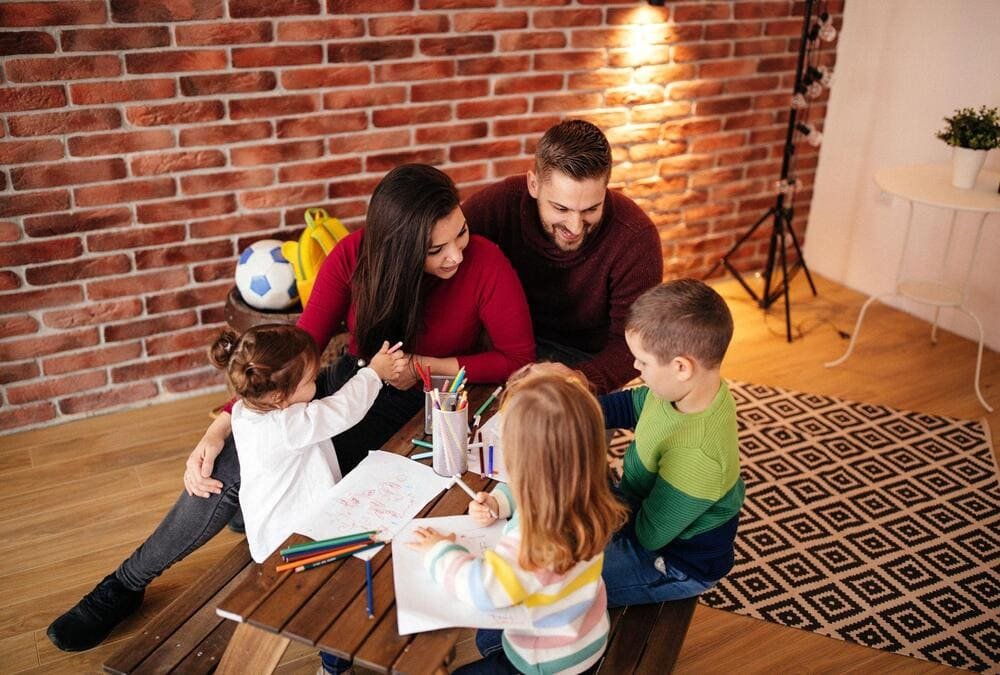
One person draws. Everyone else guesses. That’s it.
No timer. No teams. No card deck with categories. Just take turns drawing something and see who guesses it first.
Let the kids pick their own prompts — this is important. When you give them the prompt it becomes your game. When they pick it, it becomes theirs. Elliot will pick something deliberately complicated because he’s confident he can draw it and wants everyone to know it. Julian will pick his current favourite Pokemon (Tyranitar) and be genuinely offended when nobody gets it. Ariel will announce she’s drawing a butterfly and then draw something that may or may not be a butterfly depending on how generous you’re feeling.
All of this is correct behaviour. Let it happen.
3. Blind drawing
One person describes something out loud. The other person draws it — but cannot see the original, and cannot ask questions. They just have to listen and draw.
“Draw a cat sitting on a chair wearing a hat and eating a bowl of noodles.”
The results are always terrible. Wonderfully, consistently terrible. Which is exactly why it works.
This one is quietly the best game for listening skills, which as a PE teacher I can confirm most kids between the ages of five and eight have in very limited supply. Julian’s version of listening is hearing the first three words and then improvising the rest with great confidence. Every single time.
The gap between what was described and what gets drawn is where all the laughs live.
The moment from our last round
We were mid-game, everyone drawing, the table covered in paper.
Ariel was completely focused. Tongue slightly out, the way she does when she’s concentrating on something important.
Julian leaned over to sneak a peek at her drawing.
Ariel — without looking up, without pausing, without any change in expression — put one hand flat over her paper and said “Cannot see.”
Just like that. Flat. Final. Non-negotiable.
I held my breath for a second. Because I know what happens next if Julian finds it funny and goes for another peek. Ariel’s paper-thin patience would snap, the drawing would probably get crumpled, and Poo Poo Mei Mei would be over for the evening. I’ve seen it happen. It’s not pretty.
Thankfully, Julian sat back like nothing had happened.
Proudly, I will claim that Ariel’s calmness on this instance was from me. That’s mine. I’m the calm one in this household, a fact I will continue to state for as long as Miley cannot disprove it. She snaps at roughly the same speed as Ariel on a good day, and faster on a bad one. Ariel on her calm days is basically a five-year-old version of me, which I find deeply vindicating.
Miley disagrees. But Miley also snapped at the little Squirtle last Tuesday for “being in the wrong place again” so I’ll let the data speak for itself.
A few things to keep loose
Don’t correct the drawings. The terrible ones are the point.
Don’t enforce rules too strictly. A bit of chaos is what makes these games work — if everything is orderly and correct you’re basically just doing art homework.
And don’t over-explain before you start. Remember what I said about instruction booklets. Just start. The kids will figure it out faster than you expect, and the confusion in the first two minutes usually produces the funniest results anyway.
What this quietly builds
Creativity. Listening. The confidence to put something imperfect in front of other people and laugh about it rather than hide it.
These are genuinely useful things to grow in a kid.
But to Elliot, Julian and Ariel, it’s just a game where Daddy guessed “tree” when Ariel drew a horse.
And that’s honestly the better way to learn it.
More ideas that need zero prep:
[30 Screen-Free Activities for Hot or Rainy Days]
[Indoor Activities for Kids When You’re Too Tired to Plan Anything]
[Simple Science Experiments for Kids Using Things You Already Have at Home]
Pingback: 5 waiting games for kids no prep to keep kids engaged